ATS Optimisation · Author: admin
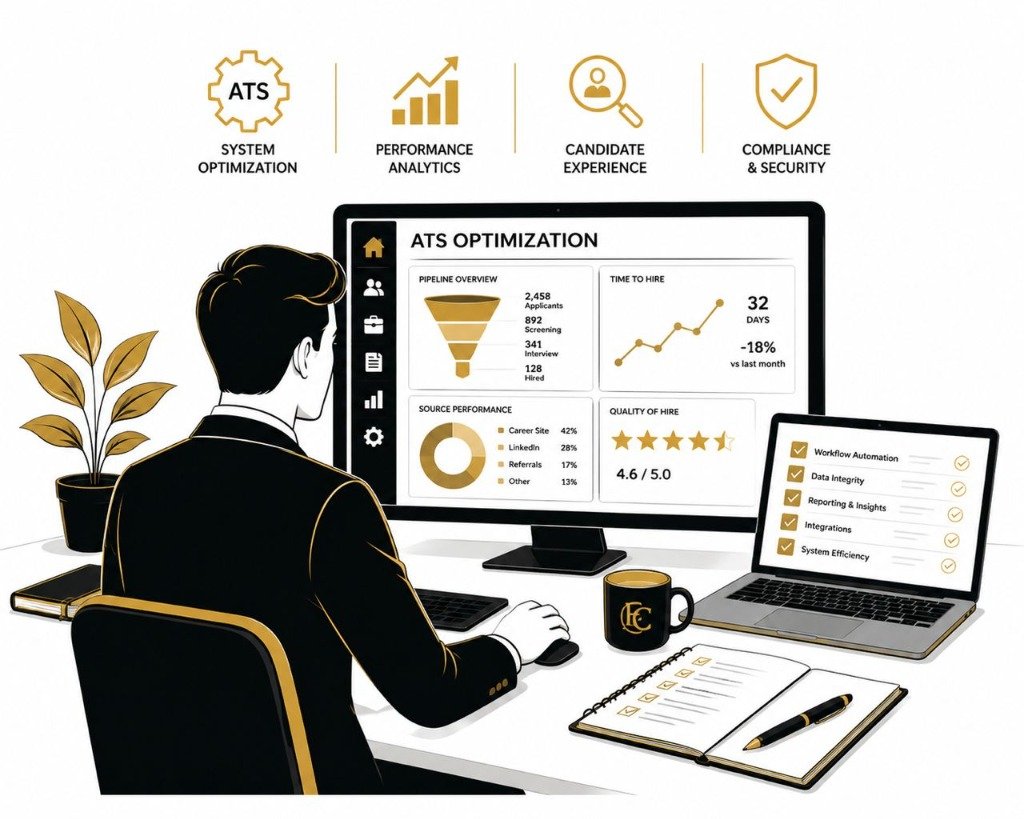
Bypassing the ATS Gatekeeper: Why Impact Metrics Outperform Duties Lists
Recruitment software parses for achievements and keyword indexing. Listing your daily duties creates silent failure paths. Learn how to convert tasks to McKinsey-style metrics.
Applicant Tracking Systems are built to measure candidate value relative to standard business KPIs. Standard template descriptions that list generic job responsibilities (e.g., "Responsible for managing project schedules") fail to index because they lack density. To secure callbacks, career files must translate standard duties into impact statements (e.g., "Engineered structural project workflows for 12 concurrent enterprise lines, shortening delivery times by 18%"). Using action-oriented nouns and active phrasing creates a strong credentials profile.
Read Strategy Playbook
Career Strategy · Author: admin
Understanding the Credentials Gap: US Resume vs. European CV Standards
Many international professionals submit UK-style CVs to US hiring systems, or vice versa, causing immediate automated rejections. Learn how these formatting parameters differ.
Excellent credentials require localized format configurations. In the United States, recruiters expect a single-page or two-page "Resume" focused on high-level commercial outcomes and recent metrics. In the United Kingdom, Canada, and Europe, review boards expect a longer, structurally complete "Curriculum Vitae" (CV) that covers chronological details, comprehensive academic background, and detailed project outlines. Submitting a multi-page detailed CV into a US-based applicant tracking system (ATS) results in parsing mismatches, leading to immediate rejection. To bypass this, professionals must maintain dual portfolios—a standard ATS US Resume and a comprehensive global CV.
Read Strategy Playbook